

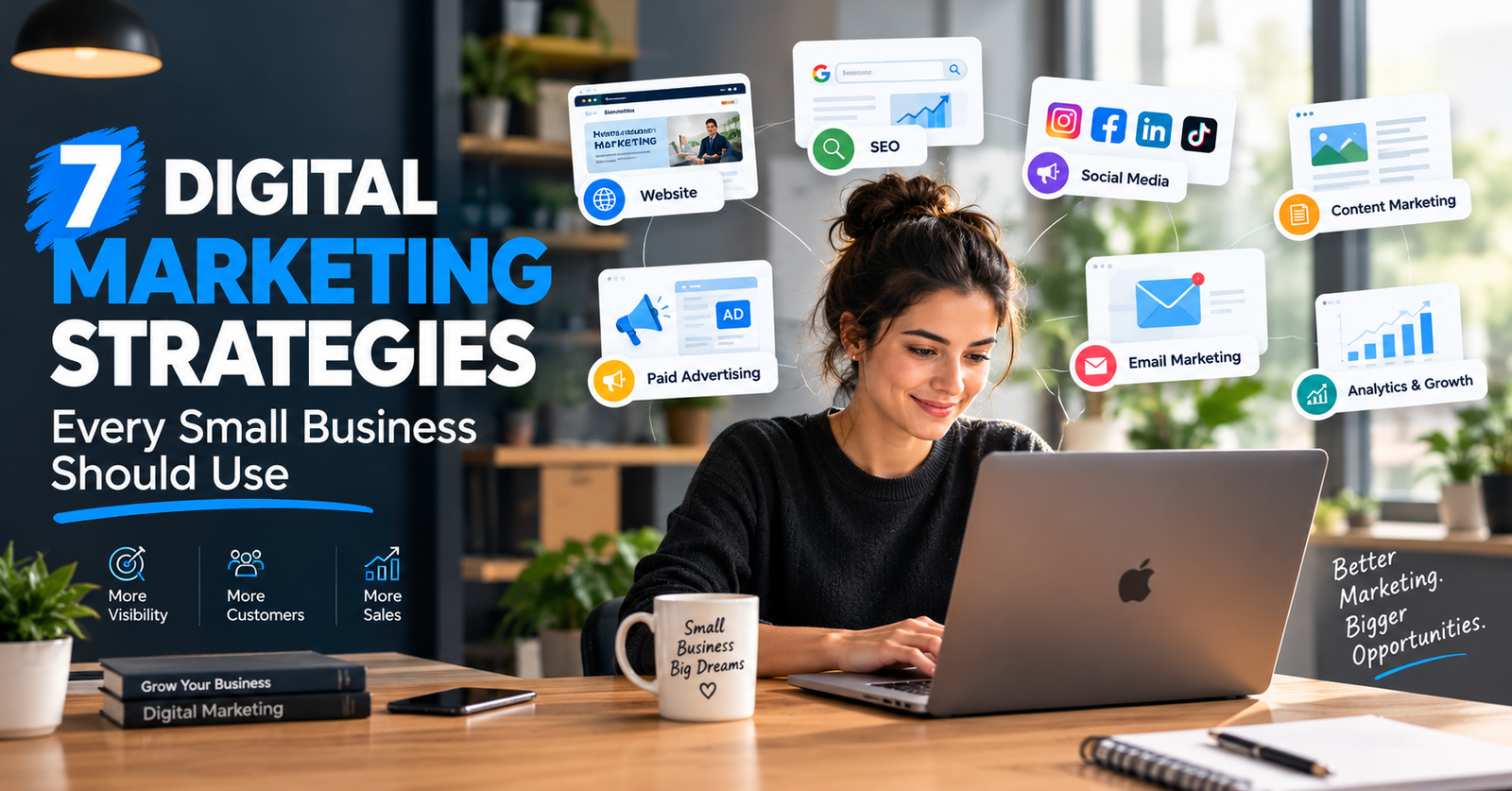
Introduction In today’s digital world, having a great product or service is not enough. If customers cannot find your business online, they are likely to choose a competitor who has a stronger digital presence. The good news is that small businesses don’t need huge marketing budgets to compete online. With the right digital marketing strategies, even a small business can reach the right audience, build trust, generate leads, and increase sales. From building a professional website to using SEO, social media, content marketing, paid advertising, email marketing, and analytics, there are several practical ways to grow your business online. Here are 7 digital marketing strategies every small business should use. 1. Build a Strong and Professional Website Your website is often the first place potential customers visit when they want to learn more about your business. Think of your website as your digital storefront. Just as a physical store needs to look professional, your website should create a positive first impression. A good business website should clearly explain: What your business does What products or services you offer Who you serve Why customers should choose you How customers can contact you Your website should also be mobile-friendly, fast, easy to navigate, and focused on conversions. For example, instead of simply writing: “We provide digital marketing services.” You could say: “We help small businesses generate more leads through SEO, social media, and performance marketing.” The second message immediately tells the visitor what you do and how you can help them. Important website elements include: Clear navigation Strong headlines Professional images Customer testimonials Clear calls-to-action Contact forms Click-to-call or WhatsApp buttons Mobile-friendly design Fast loading speed A professional website doesn’t just make your business look credible. It can also become one of your most important tools for generating leads and sales. 2. Invest in Search Engine Optimization (SEO) Having a website is only useful if potential customers can find it. That’s where Search Engine Optimization (SEO) comes in. SEO is the process of improving your website and online presence so that your business can appear more prominently in search engine results. Imagine someone searching: “Best gym near me” or “Digital marketing agency in Delhi” or “Best bakery for birthday cakes near me.” If your business appears when someone searches for those services, you have an opportunity to turn that search into a customer. Some important SEO activities include: Keyword research Optimizing website content Creating useful blog posts Improving website speed Optimizing page titles and descriptions Building quality backlinks Improving internal linking Local SEO Optimizing your Google Business Profile For local businesses, local SEO can be especially valuable. A restaurant, salon, dentist, gym, real estate agency, or home-service business can use local SEO to improve its visibility when customers search for businesses in a specific location. SEO usually takes time, but the benefit is that strong organic visibility can continue bringing relevant visitors without paying for every click. 3. Use Social Media to Build Your Brand Social media is one of the easiest ways for small businesses to stay connected with their audience. Platforms such as Instagram, Facebook, LinkedIn, TikTok, and YouTube can help businesses build awareness, showcase their products, educate customers, and create relationships. However, social media should not be treated as a place where you simply post advertisements every day. Instead, focus on creating content that your audience actually wants to consume. For example: A gym could post: Workout tips Exercise tutorials Client transformations Fitness mistakes Nutrition tips Short workout videos A restaurant could post: Food preparation videos Behind-the-scenes content New dishes Customer experiences Special events Reels A real estate business could post: Property walkthroughs Market updates Home-buying tips Neighborhood guides Investment advice The goal is simple: Don’t just sell. Educate, entertain, and build trust. Consistency also matters. You don’t necessarily need to post every day. A realistic content schedule that you can maintain is much better than posting heavily for two weeks and then disappearing. 4. Create Valuable Content Content marketing is another powerful strategy for attracting potential customers. Instead of constantly telling people to buy your product or service, create content that answers their questions and solves their problems. For example, a digital marketing agency could publish: “How Much Should a Small Business Spend on Digital Marketing?” “7 Ways to Get More Leads From Your Website” “SEO vs Paid Ads: Which Is Better for Your Business?” “How to Create a Social Media Strategy for Your Business” A fitness business could create: “Beginner’s Guide to Strength Training” “5 Common Workout Mistakes” “How Often Should You Work Out?” A real estate company could create: “First-Time Home Buyer’s Guide” “How to Choose the Right Neighborhood” “5 Things to Check Before Buying a Property” Useful content helps your business become a source of information and expertise. It can also support SEO, social media, email marketing, and lead generation at the same time. Content can include: Blog posts Videos Reels Infographics Guides Case studies FAQs Checklists Email newsletters The best content strategy is not about creating more content. It’s about creating better content for the right audience. 5. Use Paid Advertising Strategically SEO and organic social media can take time to produce results. Paid advertising can help businesses reach potential customers faster. Platforms such as Google Ads and Meta Ads allow businesses to promote their products and services to specific audiences. For example, a local dentist could use Google Ads to reach people searching for: “Dentist near me” An online clothing brand could use Instagram and Facebook advertising to showcase products to people who are likely to be interested in fashion. However, simply running advertisements doesn’t guarantee success. A successful paid advertising campaign requires: The right target audience Strong ad creatives A compelling offer Good landing pages Proper conversion tracking Continuous testing Regular optimization One important rule for small businesses is: Don’t start with a large budget before you know what works. Start with a controlled test budget, measure your results, identify the best-performing campaigns, and then gradually increase your investment. 6. Build